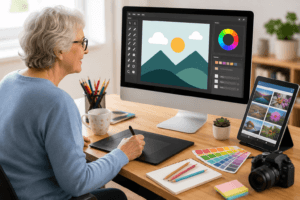
Graphic design can seem mysterious if you haven’t given it a try, but learning this skill brings a surprising amount of joy and creativity into everyday life. For seniors, graphic design is practical and adds a personal touch to projects like birthday cards, calendars, scrapbooks, or even lively posts for family on social media. Many modern tools are made with beginners of any age in mind, and you don’t need special art skills or technical knowledge to begin. With a little patience and curiosity, you can create beautiful graphics right from your computer, tablet, or even smartphone.
Best Graphic Design Tools for Seniors: Simple and Enjoyable
Not all graphic design programs are equal, especially for beginners who may not be completely comfortable with technology. Some programs are overwhelming, filled with features you may never even use. The best graphic design tools for seniors focus on clear menus, large buttons, and easy drag-and-drop layouts. Rather than dozens of tabs and small print menus, these tools present the basics clearly and in a way that’s truly enjoyable.
For example, Canva is popular because everything is visible on one screen. You get templates for greeting cards, flyers, invitations, and many more formats to explore. Adobe Express works in your web browser and provides step-by-step guidance for every project. If you prefer installing something directly onto your computer, Microsoft Paint 3D comes with many Windows computers and has an easy-to-understand layout.
Beginner Graphic Design Software: Designed for Ease
Many seniors enjoy working with design software that’s calming and doesn’t overload the senses. Seek programs with open layouts, clear font labels, and tips that pop up to explain what each button does. These touches help you feel capable and learn faster.
- Canva: Canva’s free version gives you more than enough for hobby uses. Find thousands of templates and move elements with a mouse or your finger on a touchscreen. Canva works on both computers and tablets.
- Microsoft Paint 3D: A built-in Windows app, Paint 3D updates the classic Paint with new shapes, playful stickers, and clear tools, all with simple icons and a large workspace. It’s ideal for playful projects or exploring how images can fit together.
- Adobe Express: This web-based tool is about easy templates and guided steps. It also includes video and written guides right inside the app for a great getting-started experience.
- CorelDRAW Essentials: For those willing to purchase software, CorelDRAW offers Essentials, made for beginners and hobbyists. Toolbars use both icons and text for added clarity.
Simple design software puts less emphasis on flashy features and more on making your experience fun and hassle-free. It’s best to start with free options to see what feels comfortable before spending any money.
Mobile-Friendly Graphic Design Apps for Seniors
Many people now like working on a tablet or a bigger smartphone instead of a desktop. Thankfully, most top graphic design apps work wonderfully on mobile devices. Larger touchscreens like iPads or Samsung tablets make it simple, letting you use your finger or a stylus for precise control. These apps are colorful, with bold icons and built-in tutorials.
- Canva Mobile: Canva’s mobile app closely matches its desktop version. You can begin with a template or build from scratch, and sharing finished designs is a breeze.
- Picsart: Picsart is for quick, creative editing and fun collages. It’s perfect for adding text, playful borders, and next-level cool enhancements to photos.
- Adobe Express App: This app brings the best web features to your tablet or phone, with swipeable menus and loads of inspiration included.
- Over (GoDaddy Studio): Over is wonderful for social graphics and easy layering. Design announcements, invitations, or posts with ready templates and stylish fonts.
Apps are often easier for seniors who already use a phone or tablet, especially if clicking or typing is tough. App stores feature reviews from other users, which can help you spot issues or find under-the-radar gems.
How to Start Graphic Design for Seniors: A Friendly Guide
Jumpstarting graphic design may sound intimidating, but by following a few steps, it becomes far more manageable. Here’s a simple plan I’ve used and seen help lots of seniors get going.
- Pick a Tool: Select one program or app from above. Test the free versions online. If you can log in and poke around comfortably, you’re on the right track.
- Learn Some Terms: Familiarize yourself with the basics. The canvas is your digital workspace. Layers stack text, images, or shapes so you can arrange things without making a mess. Templates are pre-made designs ready for your photos and words.
- Start Small: Try making a birthday card or social post for a friend. Choose a template, add a favorite photo, type a message, and experiment with colors and stickers.
- Ask for Help: Online forums and YouTube are loaded with step-by-step guides. If online help isn’t enough, see if your library or senior center has a tech basics class.
- Share Your Work: Save your image to your device, send it by email, print it at home, or share online. Watching your project come into reality is truly rewarding.
Skill grows quickly with regular practice. Make a new card or collage each week and watch your confidence soar as you try new features and styles.
Graphic Design Tools for Beginners 2026: Updated and Easy
The best tools in 2026 are current, well supported, and likely to stick around. Here are some options for this year that give simplicity and active support:
- Canva (Web, iPad, Android): Still with a robust free option and regular updates for accessibility and privacy.
- Adobe Express: Keeps growing with more templates and features helpful to seniors, all with clear navigation.
- Microsoft Designer: Built for Windows 11, this tool wins praise for drag-and-drop creativity and super-readable menus.
- Picsart: Offers larger button sizes on tablets and more embedded tutorials, making it a friendly creative space for all ages.
- Pixlr X: A speedy web tool for essential photo edits and starter design projects, requiring no downloads or sign-ups.
All tips mentioned are reviewed by thousands and updated regularly, so you can rely on them for years without worrying about sudden changes or shutdowns.
Graphic Design Resources for Seniors
It’s much easier to learn with a supportive community and step-by-step lessons. Many community centers have intro-to-computers classes or even tailored design programs. Additional places to check:
- YouTube Channels: “TechBoomers” and “Senior Tech Club” post step-by-step tech how tos for older adults. For design, try searching “Canva tutorials for seniors” or “graphic design basics for beginners.”
- Library Digital Literacy Programs: Libraries often host free design classes or let you access online courses like LinkedIn Learning at no cost.
- Local Community Groups: Senior centers may run art or photography clubs that welcome digital projects. Take your device along to share and learn.
- Facebook Groups: Active groups such as “Seniors Learning Technology” or “Canva Beginners” let you ask questions, share your creations, and get tips for the next fun project.
Exploring local options can lead to in-person teaching and support, which often helps you pick up skills much faster if you prefer face-to-face interaction.
Top Graphic Design Software for Seniors: Pros and Cons
Picking the right tool often takes a little trial and error. Here’s a rundown of popular choices for senior beginners and why they might fit your needs best:
- Canva:
Pros: Very straightforward interface, thousands of templates, robust free plan, easy sharing and printing.
Cons: Requires an email to register. The “Pro” plan adds extras but is only necessary for premium features.
- Microsoft Paint 3D:
Pros: Generally preinstalled, perfect for playful sketches, no need for internet once installed.
Cons: Few templates, not intended for polished layouts.
- Adobe Express:
Pros: Sleek and modern, excellent templates, built-in guides.
Cons: Needs internet for saving. Requires a free Adobe account.
- Picsart:
Pros: Fast editing, great for collages and mobile tweaks, plenty of stickers.
Cons: Some tools are premium only. Free version displays ads that may distract.
- CorelDRAW Essentials:
Pros: One-time purchase, easy compared to pro packages, good for photo books and hobby prints.
Cons: Not free, and a short learning period is needed for first-time users.
Graphic Design Tutorials for Beginners
Graphic design tutorials are everywhere, from quick YouTube videos to written step lists. Some seniors prefer reading, others following along with video. Here are helpful places for different learning styles:
- YouTube: Channels like “The Simple Creative” do clear “Canva for Beginners” walkthroughs, and “Seniors Guide to Tech” shows easy steps for Paint and others.
- Canva Design School: Canva’s site offers short, focused lessons and project-based tutorials you can do at your own speed.
- TechBoomers.com: This source covers software and internet basics for seniors in both written and video formats.
- Picsart Blog Tutorials: Find guides for collages, cards, and edits made for mobile devices.
- Library Workshops: Some libraries share videos or handouts from beginner design lessons; these are usually free to access or print.
Take the time to pause and repeat each lesson or write down instructions step by step. There’s no need to rush; progress comes naturally with regular practice.
Best Free Graphic Design Tools 2026
Buying expensive software isn’t needed; there are many top-rated free graphic design programs ideal for seniors. Free tools handle nearly any need, from cards and invitations to photo books and small custom gifts.
- Canva Free: Strong basic tools and templates for most beginner projects, plus seamless printing or sharing.
- Picsart Free: Includes stickers, text, and fun effects for collages and quick photo edits. Works on mobile and desktop.
- Pixlr X: All browser-based, quick to load, and no sign-in needed. Perfect for photo tweaks and image cropping.
- Microsoft Paint 3D: Included for Windows users, with no pop-up ads or fees. Great canvas options and playful features for testing out ideas.
- Krita: If you’re eager to try painting or drawing, Krita is a beloved, open-source option with a helpful online community.
Trying two or three free programs makes it easy to pick your favorites for comfort and enjoyability. With nothing to lose, you’ll soon know which inspires you most.
Getting started with graphic design opens the door to all sorts of joyful and useful projects for seniors. Your skill and confidence will grow with every card, scrapbook page, or social media post you create. Along the way, expect some funny mishaps, that just means you’re exploring new ground. Keep testing, enjoy every small win, and show off your work when you feel ready. Most of all, have fun making digital art that feels like it comes from your heart.

This article was created with AI assistance and reviewed by a human editor.