If you’ve ever scrolled through Instagram or Etsy and wondered how people are turning their craft skills into income, you’re not alone. There are plenty of trending crafts you can sell online that can bring in real profits, even if you’re working from your kitchen table or a tiny studio. The world of handmade goods is booming, and there’s never been a better time to turn your creative hobby into a legitimate business.
Where to Find Trending Crafts to Sell Online
Staying ahead of trends is really important if you want your crafts to catch people’s eyes and open their wallets. I use a mix of online research, social media, and plain old curiosity to keep tabs on what’s hot. Here are some pretty handy places to start:
- Social Media Inspiration: Checking TikTok, Instagram Reels, and Pinterest gives you a quick peek at what’s about to blow up. Search for hashtags like #handmadetrends2026 or #DIYCrafts.
- Etsy’s Trending Section: Etsy does a great job of highlighting crafts that are gaining traction. Their “trending now” or holiday spotlights help you see what crafts sell best on Etsy in 2026 before everyone else does.
- Google Trends & Craft Platforms: Tools like Google Trends let you compare search volume for keywords such as “custom tumblers” or “polymer clay earrings.” Sites like Handmadeology and CraftCount track sales to help you spot trending DIY crafts for small business ideas.
- Crafters’ Facebook Groups: Joining online craft and seller community groups always brings unexpected ideas and honest feedback on what’s working now.
You don’t need to chase every trend, but keeping your finger on the pulse helps you find creative projects that people are actually searching for and willing to buy. That means less guesswork and more real sales.
Most Profitable Handmade Crafts Right Now (2026 Edition)
Some handmade items are popular year after year, but others are enjoying a surge because of trends on social media, TikTok aesthetics, or demand for eco-friendly alternatives. Here are some of the most profitable handmade crafts right now, with real earning potential for crafters who are ready to hustle:
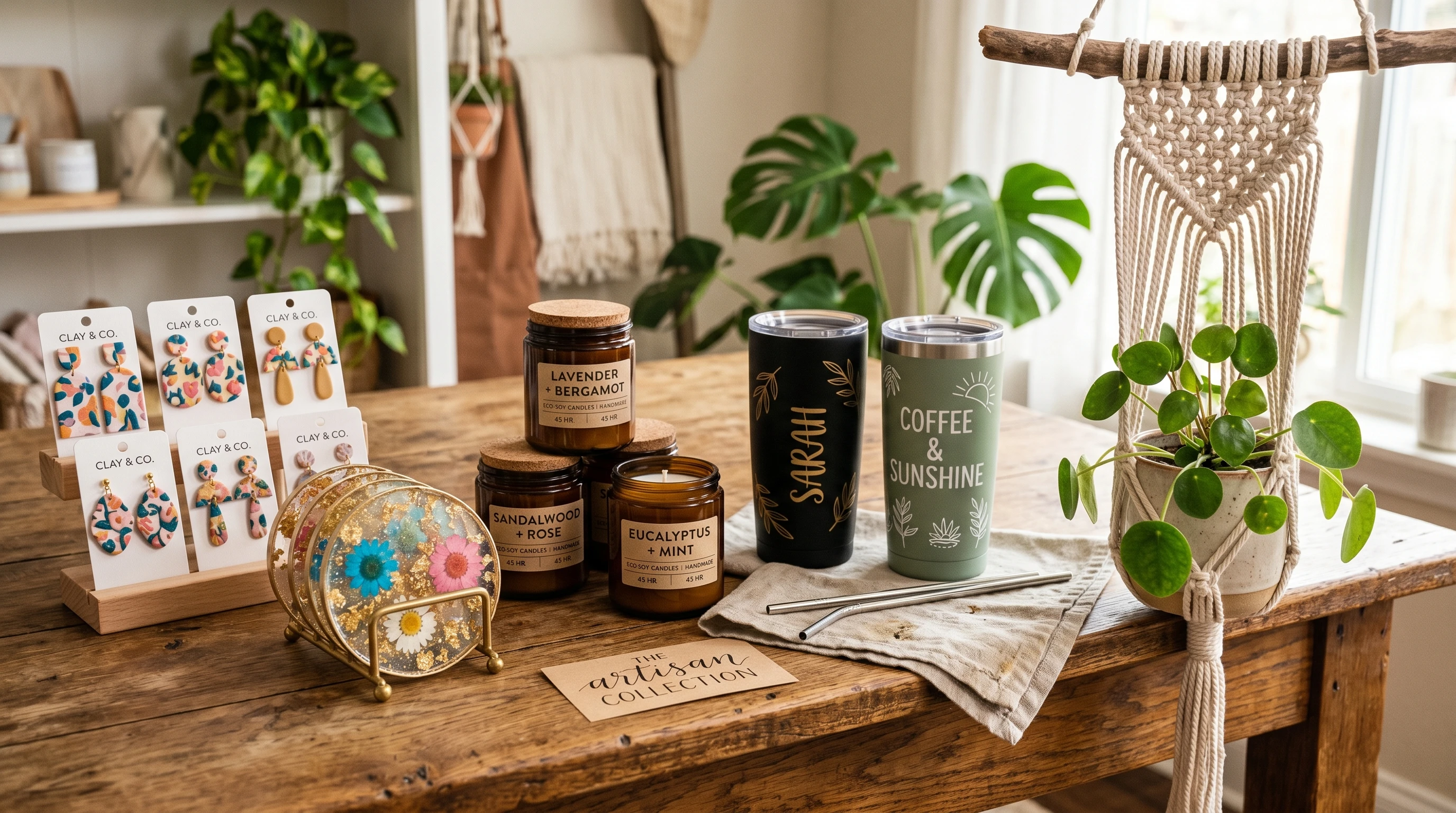
- Polymer Clay Earrings & Jewelry: Super lightweight, customizable, and always a hit with the Instagram crowd. Bold clay statement earrings with florals, funky patterns, or terrazzo textures are top sellers.
- Personalized Tumblers & Drinkware: Customized stainless steel tumblers and resin-coated cups with names, funny sayings, or trending graphics fly off the shelves on Etsy. Laser engraving and vinyl decals add a personal touch.
- Hand-poured candles (eco-friendly): Soy and beeswax candles, especially those with quirky scents or unique vessel designs, see big profits. Bonus points for using recycled or custom ceramic jars.
- Bespoke Resin Art: Resin coasters, jewelry trays, and abstract wall art catch the eye with cool color swirls, pressed flowers, or gold leaf details. People love the one-of-a-kind aspect.
- Digital Art Printables: Printable planners, wall art, or wedding signage designed on Procreate or Canva are trending because people want instant downloads with a unique style. The profit margin is huge once the design is done.
- Boho Wall Hangings & Macrame: The mid-2020s are still big on cozy, earthy decor. Macrame plant hangers, rainbow wall hangings, and fiber art sell well through Instagram and home decor shops.
- Knitted Accessories: Chunky knit beanies, fingerless gloves, and headbands (especially using vegan yarns or bold colors) are steady sellers each fall and winter.
- Customized Stationery: Think unique wedding invitations, personalized stickers, and bullet journal supplies. Handmade paper goods are making a comeback with a modern twist.
I’ve seen plenty of crafters grow a side hustle into a full-time job by mixing these hot crafts with reliable marketing. If you’re looking for real success, focusing on popular but not overly saturated categories gives you a better shot at standing out.
How to Start Selling Crafts Online Successfully
Listing your first item is exciting, but selling crafts online is about way more than snapping a quick photo and hoping for the best. Here’s what I recommend if you actually want to get those PayPal notifications rolling in:
- Pick Your Platform: Start where your audience is. Etsy is great for handmade and vintage; Shopify is best for building your own brand, and Instagram or Facebook Shops are ideal if you already have a following. Research where shoppers go for your type of craft, and sometimes a niche platform like Folksy or ArtFire works better for specialty items.
- Set Up a Great Product Listing: High-quality, bright photos make all the difference. Use multiple angles, show the product in action, and add a human touch (like your signature giftwrapping or personal thank-you note). Keep your listings clear around sizing, color, care instructions, and processing times.
- Price Smart: Pricing is tricky. You don’t want to charge too little for your time or materials. Factor in the cost of materials, packaging, platform fees, and your hourly wage. Use seller calculators or browse active listings to see market rates.
- Promote Organically: Social media works wonders if you post demos, behind-the-scenes shots, and customer photos. Team up with microinfluencers or offer limited-edition drops to drum up excitement.
- Packing & Shipping: Packaging helps with branding and keeps items safe. Use branded tissue, eco-friendly mailers, and always double-check shipping costs to avoid surprises. Fast shipping and tracking impress buyers and increase your chances of great reviews.
- Respond to Messages: Good customer service turns a single sale into repeat business. Respond quickly and keep communication friendly and clear.
Learning how to start selling crafts online successfully doesn’t mean doing it all at once. Start simple, focus on one or two crafts at first, and grow as you go. Consistency and authenticity win every time.

Tips for Spotting Craft Trends Before They Boom
Jumping on a trend when it’s just getting started can lead to big profits, but you also need to be on the lookout. I like to make this a fun part of my week so it never feels like a grind. Here’s what I’ve found works for me:
- Notice Repeat Patterns: If you see a particular style, color, or motif showing up in multiple places (for example, disco ball planters or mushroom graphics), there’s a chance it’s about to take off.
- Test Small, Scale Fast: Make a few items and see how they do. If something gets a great reaction or sells out, you can make more quickly. This keeps your inventory fresh but not overwhelming.
- Ask Your Audience: Poll your followers, check in on craft forums, or even use simple Instagram story questions to gauge interest before you invest time or materials into a new idea.
- Follow Industry Newsletters: Signing up for monthly newsletters from sites like Etsy, The Crafted Life, or Handmade Seller gets you the scoop on upcoming holidays or changes in customer behavior.
Staying nimble is really important. If you love experimenting and can mix things up when needed, you’ll have an edge on other sellers who stick only with the tried and true.
Challenges to Consider Before Getting Into Craft Selling
Like any business, selling crafts online isn’t all smooth sailing. Before you sink a bunch of money or plan a massive launch, here are some things to remember:
- Time Management: Handmade items take time, and you want to avoid burnout. Batch processing or prepping materials in advance can help a lot, especially during holiday order spikes.
- Material Costs and Supply Issues: Prices for supplies can change fast. Buying in bulk can save money, but be careful with large investments in brand-new ideas.
- Staying Motivated: Not every product will take off. Some bestsellers from two years ago might not sell at all this season. Keep things fresh and don’t be discouraged by slow spells.
- Copycats: With profitable crafts, imitation is common. Keep your brand voice strong and offer something extra, such as limited edition drops or custom options.
- Understanding Platform Fees and Taxes: Every site takes a cut, and it’s smart to plan for taxes from day one. Even as a part-timer, keeping your books tidy makes year-end less stressful.
Every challenge comes with a learning curve. Nothing feels better than positive reviews and repeat buyers who love your style.
Coping with Slow Sales
All sellers deal with slow streaks. This is a great time to sharpen your photos, try out marketing tweaks, or brainstorm seasonal items. Sometimes, taking a break to develop new designs or try a different sales channel can give your business a fresh boost.
Balancing Creativity and Business
Making what you love is awesome, but the most successful online sellers pay attention to both creativity and numbers. Track which items make you money, and don’t be afraid to let go of things that simply aren’t selling. I find that balancing what I enjoy making with what buyers want is really rewarding.
Frequently Asked Questions
Curious about selling trending crafts online? Here are some questions I’ve heard a lot lately:
Question: How do I know if my craft idea will actually sell?
Answer: Try testing the waters with a few listings and see how buyers respond. Search Etsy and social media to track down demand for similar items. If other sellers have steady sales in that niche, it’s worth checking out.
Question: What crafts sell best on Etsy in 2026?
Answer: Early predictions point to eco-friendly candles, personalized tumblers, resin art, digital downloads, and bold jewelry like clay earrings. Styles may switch up, so keep researching as trends develop.
Question: How do I price my crafts for profit?
Answer: Add up your time, materials, and all platform fees, then compare similar items online. It’s totally fine to adjust pricing as you get feedback or your skills improve.
Question: Do I need a business license to sell crafts from home?
Answer: This depends on your state or country. Many hobby sellers get started without one, but if you want to grow or sell at markets, it’s smart to look into local regulations. Some platforms require you to confirm you’re allowed to sell specific types of items.
Final Thoughts
Finding the most profitable trending crafts to sell online is about mixing creativity with a little game plan. Keep an eye on what’s catching fire, try out ideas often, and never stop learning from your customers and fellow sellers. If you’re new to this, start small, stay curious, and celebrate every sale. With a bit of hustle and creative flair, that craft table could be the start of a thriving business in 2026 and beyond.
This article was created with AI assistance and reviewed by a human editor.






I really enjoyed reading this post and the way it breaks down so many different trending craft ideas that can actually turn into income. It is especially helpful how you highlight that success comes not only from creativity, but also from choosing the right products with low material costs and high perceived value. The examples around handmade items like candles, jewelry, and personalized crafts make it easy to understand what is currently in demand online. I also liked the focus on how platforms like Etsy and social media can help small makers reach buyers more effectively.
It got me thinking about how important it is to balance passion with strategy when selling handmade items. From your experience, which craft category do you think is the most sustainable long-term, especially for someone who wants to start small and gradually build a consistent online income without feeling overwhelmed at the beginning?
That’s a great takeaway, and you’re absolutely right, balancing passion with strategy is what really makes a handmade business over time.
From experience, the most sustainable craft category in the long term is usually personalized, repeatable products, things that can be slightly customized but follow a consistent production process. Examples include simple jewelry, candles, or digital crafts (like printable art or templates).
The reason these tend to work well is:
Low complexity = less burnout when you’re starting out
Scalable process as demand grows
Consistent demand because people buy them for gifts, events, or everyday use
Room for branding, which helps you stand out over time
If I had to narrow it down, I’d say personalized gifts (like jewelry or small keepsakes) are one of the strongest long-term options. They combine emotional value (people are willing to pay more) with relatively low material costs and the potential for repeat purchases.
A smart way to start is:
Pick one simple product
Create 3–5 variations
Test what sells
Then expand gradually based on real demand
That way, you avoid overwhelm while still building something that can grow into a steady income stream.
Out of curiosity, are you leaning toward any specific craft already, or still exploring ideas?